

Realities of the early Christian church
Introducing the Gathrewell Letters


Have you ever walked into a church during a moment of worship and suddenly started to cry? It happens. If you’ve been to a gathering where other people were worshipping God, there’s a good chance you’ve felt this — even if briefly. Other times, you may have walked into a church, felt that something was off, and just wanted to leave.
Whether it was an emotional moment, or a real encounter with the God of Abraham, Isaac, and Jacob, joining a church gathering can stir a lot in a human being. Especially if you haven’t been to one before, or if you’re attending during a tough time in your life.
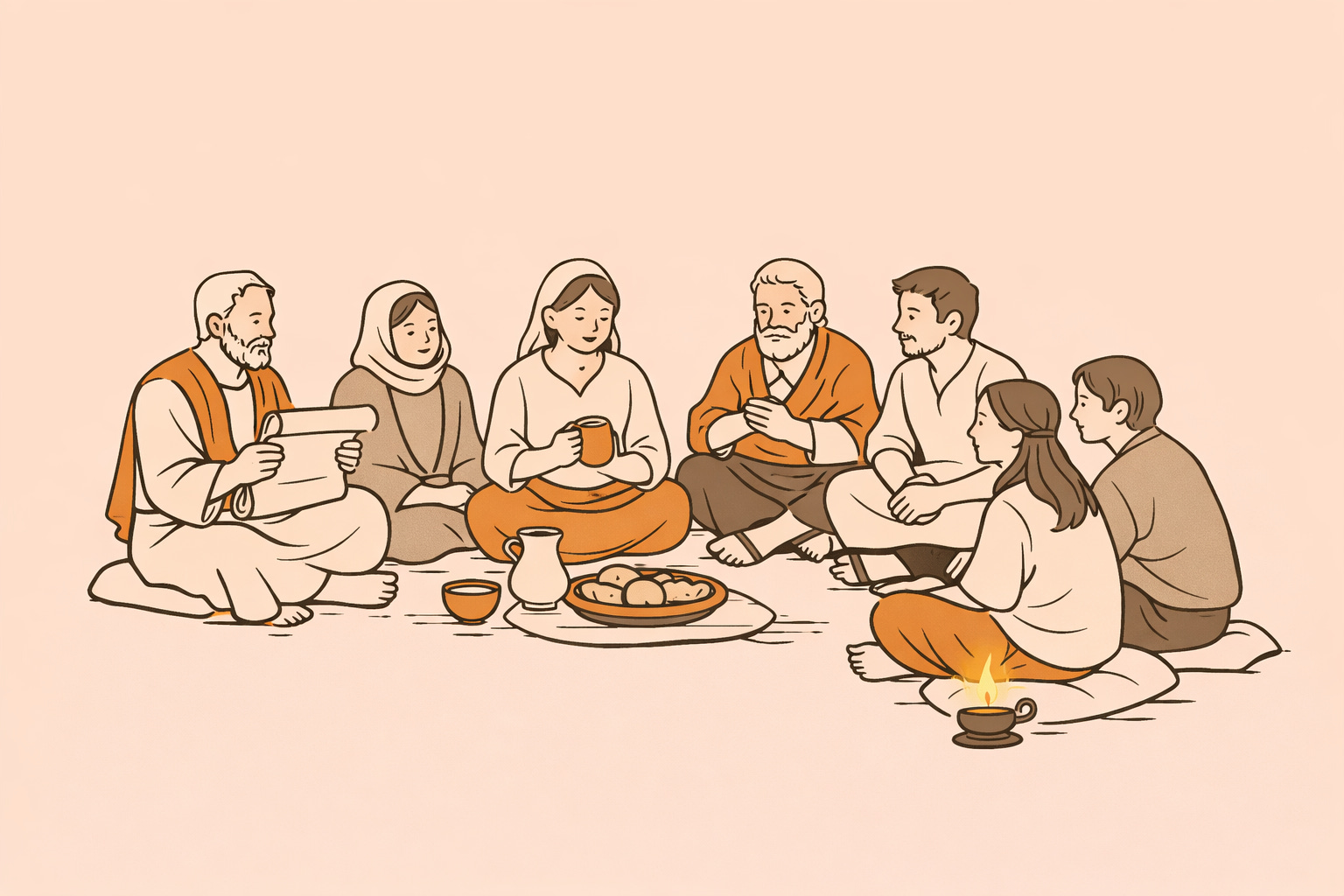
Imagine, for a second, that you’re in the first, second or third Century, Anno Domini.
Can you picture what it must have been like to join a gathering of Christians back then?
There was certainly no free espresso bar. No cup holders. No giant fish tank. No murals or stained glass or annual turkey toss. Forget the announcements, the volunteer greeter, and the A/V team setting up hours before anyone else walks in.
The early historical, biblical Christian church had none such perks. They had very different cares and concerns.
“They were continually devoting themselves to the apostles’ teaching and to fellowship, to the breaking of bread and to prayer.”
— Acts 2:42 NASB2020
They were a group of people who had witnessed or heard about miracles — above all, the resurrection — and radical commands from a Messiah who claimed to be not only a savior, but also God Himself:
‘Love your enemies.’
‘Take up your cross.’
‘Turn the other cheek.’
The early church were followers of Jesus first and foremost, and the decision to believe in Him and obey what He commanded was truly life‑altering.
Over the next few weeks and months we’re going to explore what the early church was like, based on the New Testament, and historical documents, including early Christian voices who described their own gatherings.
One early writer urged believers:
“On the Lord’s day… come together, break bread and give thanks, having first confessed your sins, so that your sacrifice may be pure.”
—Didache 14 (an ancient, extra-biblical text that is useful for historical context from 70-100 AD)
Another said:
“When you assemble frequently in the same place, the powers of Satan are destroyed… by the unity of your faith.”
— Ignatius of Antioch, Letter to the Ephesians 13 (paraphrase of another ancient, extra-biblical text from 100-110 AD)
We’ll be reminded that the church was a people, not a place.
Evangelism was relational, not event-driven.
Gatherings were participatory meals that cared for the poor and the weak, rather than performances aimed at consumers.
Faith was costly; not comfortable.
Ultimately, the point was knowing, following and praising the name of Jesus — nothing and no one else.
Ps. Merry Christmas. Jesus is the only reason for the season.
