

Evangelism was relational, not event-driven
Gathrewell Letters: Learning from the early Christian church


At various moments during His three-year ministry, Jesus spoke to crowds of thousands. He miraculously fed 5,000 people. Throughout modern history, Billy Graham packed stadiums with altar calls. Today, your nearest megachurch often operates with the precision of a sports arena, multiple times a weekend. Organizations and campaigns like ‘The Send’ have gathered hundreds of thousands of young people, calling them toward a missional life. Meanwhile, Forrest Frank shares Jesus with millions through music and social media—with hundreds of thousands expected to see him live on The Jesus Generation Tour across dozens of cities.
Humans are drawn to moments. To events. To shared experiences that feel bigger than ourselves. The good news we call the Gospel has undeniably spread through large gatherings across centuries and continents. Thank God for those moments—especially when they awaken people to a life that continues long after the crowd disperses.
But large events have never been the only—or even the primary—way the Gospel takes root.
The word ‘evangelism’ is often imagined as someone speaking into a microphone: ignored on a street corner, or admired by tens of thousands in an arena. In common usage today, Oxford defines evangelism broadly as ‘zealous advocacy of a cause,’ which is why people speak of evangelizing everything from Bitcoin and HYROX to lululemon and veganism. But the primary definition of evangelism remains this: ‘The spreading of the Christian gospel by public preaching or personal witness.’
The word comes from the same Greek root as gospel: euangelion. To evangelize is, quite literally, to ‘gospel’—to carry and embody the good news of Jesus Christ in word and life. Biblically, that includes public proclamation. But it also includes something quieter, slower, and more demanding: persistent personal witness within everyday relationships.
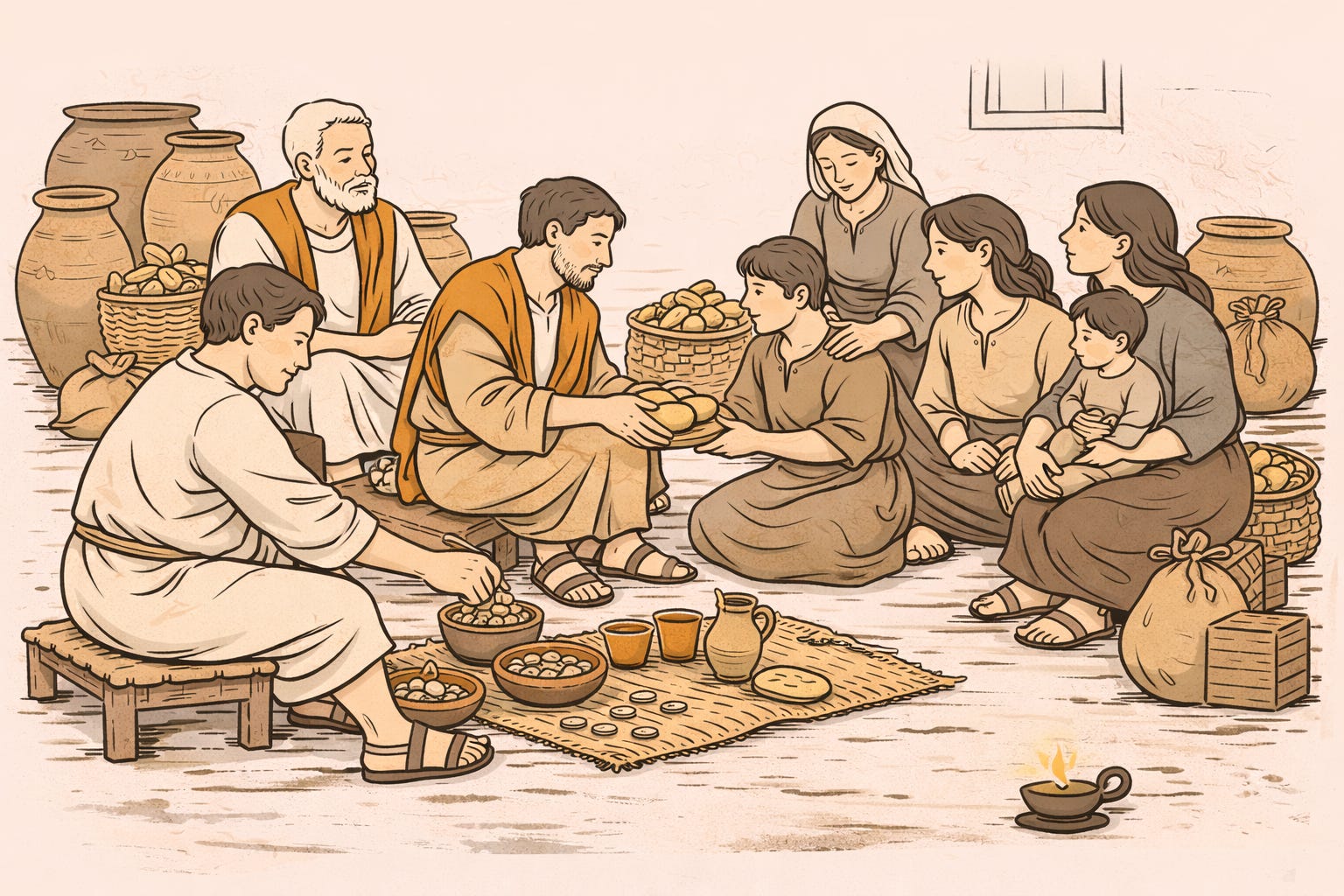
Evangelism in the early Christian church
If we step back into the world of the early Christian church, a clear pattern emerges. Evangelism was largely relational, household-shaped, and network-driven.
Faith typically moved first through those closest to you—your family members, friends, neighbors—and then outward along existing relational lines. In the first-century Mediterranean world, a household was not just a nuclear family. It included extended kin, servants, and dependents.
When the Gospel entered a household, it entered an entire social ecosystem at once.
Early Christian gatherings were not staged primarily for outsiders. Evangelism was woven into the fabric of ongoing community life. Converts were patiently taught and formed over time, folded into shared meals, and taught to live a new way of life together. Neutral and even hostile observers noticed this. Pliny the Younger describes Christians meeting regularly before dawn for worship and again later for a communal meal—most likely in private homes, not public halls.
Historical and sociological analyses suggest that most people came to faith through someone they already knew. The New Testament reflects this consistently. While public sermons appear—especially in Acts—they function as gateways into deeply relational communities devoted to teaching, fellowship, shared meals, and prayer.
Households as the mission field
The book of Acts repeatedly highlights household-level conversions. In Acts 10, Cornelius is described as:
“A devout man who feared God with all his household, gave alms generously to the people, and prayed continually to God.”
— Acts 10:2 (ESV)
When Peter arrives, the Gospel doesn’t land on Cornelius alone. The Spirit fills the household. Baptism follows. A whole social unit is transformed.
In Acts 16, the Philippian jailer hears the word of the Lord along with everyone in his house. That very night, he sets a meal for Paul and Silas, and rejoices with his entire household.
“At that hour of the night, he took them and washed their wounds; and immediately he and all his household were baptized.”
— Acts 16:33
Lydia’s story follows the same pattern. Her heart is opened to the message, she and her household are baptized, and her home becomes the meeting place for the Philippian church.
A household becomes a mission base.
Crispus, the synagogue ruler in Corinth, came to faith ‘together with his entire household.’ Paul later mentions baptizing the household of Stephanas, calling them the first converts in Achaia and noting that they devoted themselves to serving the saints.
God’s salvation consistently takes hold of real social units—families, homes, shared lives—and turns them into outposts of the Kingdom.
Why this still matters
The missional implications are profound. The Gospel often spreads most effectively through relational connectors—people whose lives already overlap with many others. Discipleship unfolds not in isolation, but collectively. Faith is learned by watching, sharing, eating, serving, and enduring together.
The early church was a people before it was a place. Evangelism, therefore, was not merely the communication of ideas, but a shared way of life over time.
We see this pattern in Jesus Himself. He was interrupted while walking, eating, attending weddings, sitting at wells. Good news arrived in the middle of ordinary life.
History was changed through conversations, meals, and relationships that looked unremarkable in the moment.
Events as sparks, communities as fire
God works through many means—printing presses and podcasts, stadiums and social feeds, live streams and DMs. Large gatherings can be powerful sparks. But without communities and households to receive, embody, and disciple people afterward, the fire fades.
In the long run, the front lines of evangelism are usually not stages or screens, but tables, living rooms, car rides, workplaces, coffee shops, and shared routines.
Clement of Alexandria once wrote, “Every place and every time in which we entertain the idea of God is in reality sacred.” Worship and witness are not confined to special buildings or moments. They begin at home.
“As for me and my house, we will serve the LORD.”
— Joshua 24:15
